Why there are different manufacturing standards for DK, DKOS, DKOL and JIC fittings and how they differ
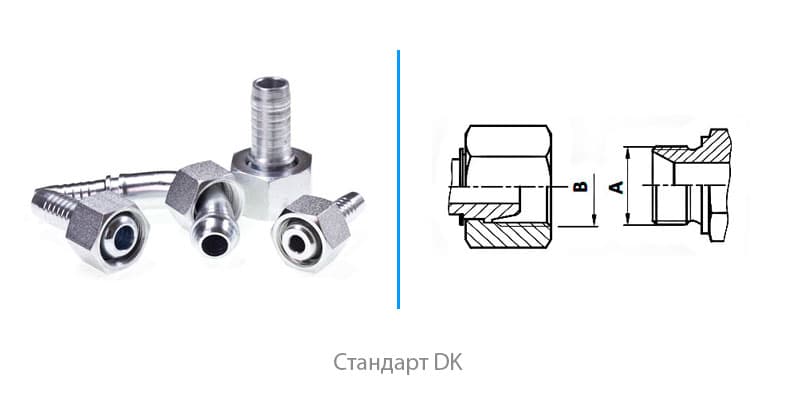
Why there are different manufacturing standards for DK, DKOS, DKOL and JIC fittings and how they differ
One of the components of a high-pressure hose (HP hose) is the metal fitting.
As machinery and equipment developed, different fitting standards emerged. This is due to the design features of the working units and to the countries where they were created, each with its own units of measurement.
The main distinguishing feature of fittings is the thread size. At present there are three of them.
- Metric thread of the European standard (DIN / GOST). The standard uses the following fitting types:
DK, DKO, DKI, DKM, DK-Flat, DKL і DKS, DKFM і DKFG, DKWC, JIS-Komatsu, NTK.
- British Standard Pipe inch thread (BSP). The following types are used:
BSP, BSPT, BSP-Flat, BSP (O-ring), NPTF, NPSM, JIS-Toyota.
- Inch thread of the American standard (SAE).
Types used:
JIC, ORFS, SAE.
Let’s take a closer look at the history, advantages and drawbacks of some popular standards and types of fittings for HP hoses.
The DK standard
Created back in the 1950s, this standard uses metric threads from M14×1.5 to M52×2 and a universal nipple with sealing angles of 24°, 37° and 60°.
The drawback of this type is fairly low pressure and load ratings. Also, because most units of that era are being replaced with more modern ones, this type of fitting is used less and less.
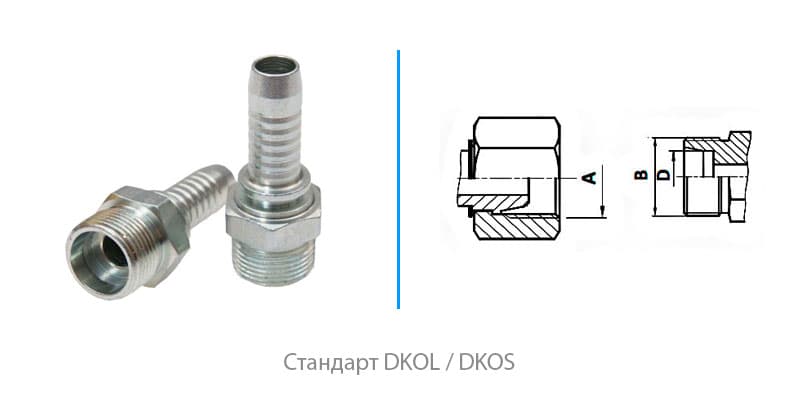
The DK standardO
This standard was developed in Germany and is divided into two types:
– DKOL – light-series fittings
– DKOS – heavy-series fittings
The fittings are made with an O-ring seal at the nipple tip. The seating cone sealing angle is 24°. Fittings with a male thread and 60° and 24° cones fit only universal fittings with a female thread and 60° and 24° cones.
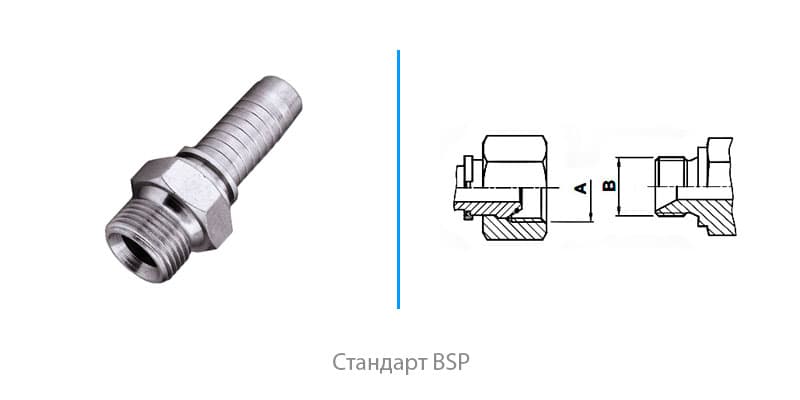
The BSP standard
This standard uses what is known as the Whitworth thread. On fittings of this standard, sealing is achieved in two ways:
– by contact of the thread profile
– by a combination of cone and ring seals
The sealing angle is 60°.
It is also worth noting that fittings of this standard are made with two thread forms
– with a parallel thread (BSPP standard)
– with a tapered thread (BSPT standard)
BSP fittings are sometimes used in plumbing applications.
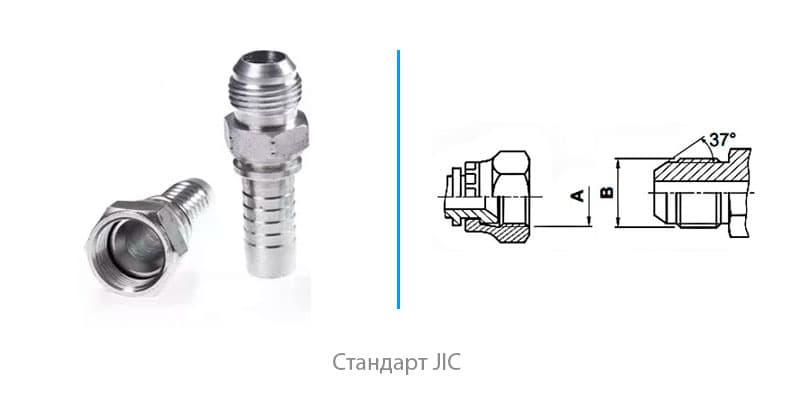
The JIC standard
This design and standard were developed in the USA in the 1950s for connecting flared tubes. The advantage of this fitting type is compatibility with many systems. The inverted cone sealing angle is 74°.
The fittings are manufactured with an American inch thread with a 60° profile angle.
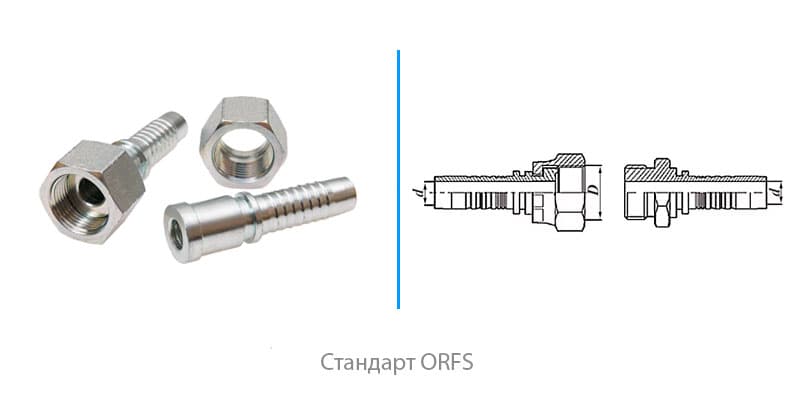
The ORFS standard
The ORFS standard був розроблений в США. Свою популярність, дана конструкція завоювала за рахунок високого рівня ущільнення і стійкості до вібрацій. При використанні даного типу фітингів зручно встановлювати РВД на сам механізм без зміщення інших елементів. Конструкційно кільце ущільнювача розташовано в канавці самого фітинга.
We would like to note that for many years NAK has been engaged in HP hose manufacturing. In our work we use machines from Uniflex, known for their high German quality. Finished batches of hoses undergo testing. If you need hose supplies or simply a repair, our specialists are always ready to advise on selection and, of course, to assemble a finished product according to your specification.